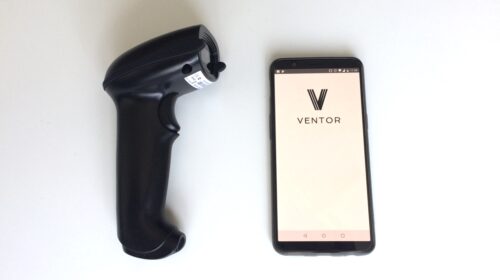
The Healthcare Industry Barcode (HIBC barcodes) is a barcode standard designed specifically for the healthcare industry. This works as an effective and reliable tool for labeling pharmaceuticals, a variety of medical devices, and other medical products. The importance of these barcodes is that they include information about production dates, serial numbers, and expiration dates. This greatly simplifies not only the control of medical products but also inventory and cost management.
There are many more advantages to using HIBC than one might think at first glance, and in order to realize the benefits, you need to find reliable solutions that support these barcodes, such as the Ventor app. In this article, we will take a detailed look at HIBC barcodes, explain their main advantages not only in medicine but also in other fields, and share modern business solutions that support HIBC while also providing many other useful features.
Understanding HIBC Barcodes
First of all, it is important to note that all barcodes are divided into one-dimensional and two-dimensional barcodes. The former are built in the form of vertical black stripes with white gaps, and the latter are in the form of small black squares on a white background. The latter are more popular since they are able to encode information both horizontally and vertically. Although these barcodes are most commonly used in healthcare, the importance of HIBC in warehouse management should not be underestimated.
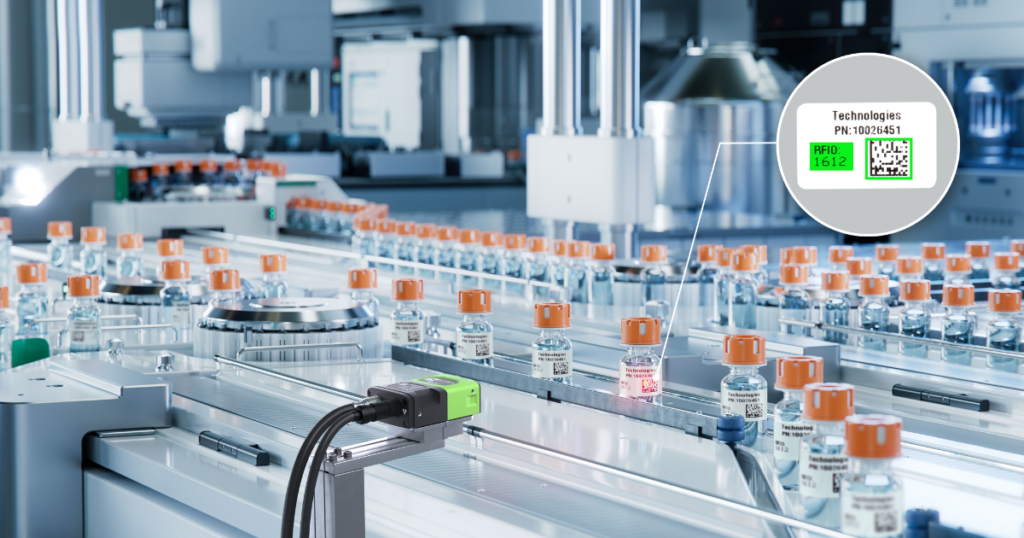
HIBC barcode standards for healthcare
This set of standards was developed by the Healthcare Industry Business Communications Council for the purpose of labeling and identifying medical products and devices. As such, the HIBC standards include the use of the following barcodes:
- Code 39
- Code 128
- Data Matrix Code
In addition, compliance with the HIBC Supplier Labeling Standard is mandatory, since it defines the format of barcode labels and data elements.
The HIBC barcode standard covers different types of barcodes, such as:
- HIBC UDI (Unique Device Identifier)
- HIBC LIC (Label Identification Code)
- HIBC PPN (Primary Product Number)
Each of these types serves different purposes in healthcare inventory tracking and supply chain.
HIBC barcode primary use cases
Medication traceability. These barcodes provide the ability to encode information about expiration dates and batches of medical products. In this way, supply chain managers can effectively handle the process while avoiding errors and expired goods.
Medical cost management. HIBC barcodes can be printed on medical expense documents and allow healthcare providers to track patients’ names, dates of treatments, and results of various diagnostic tests, and thus also manage medical expenses.
Healthcare supply chain management. HIBC displays accurate data and provides traceability, so both suppliers and healthcare organizations can track and manage products more efficiently.
Medical equipment management. Medical facilities print these barcodes on medical devices and therefore can track and manage the devices. In this case, the encoded data includes information about equipment types, dates of manufacture, expiration dates, and scheduled maintenance.
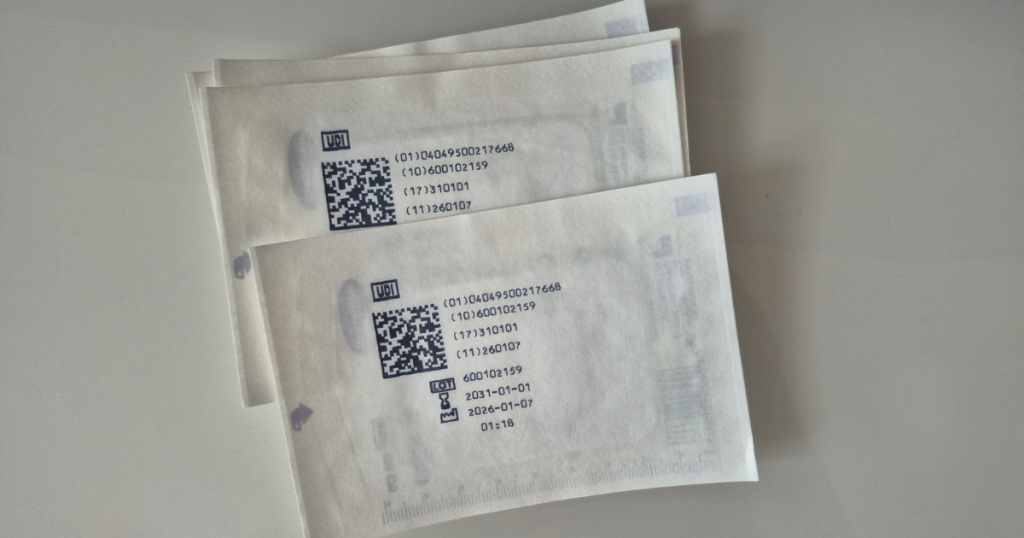
Advantages of using HIBC
- Accuracy
The accuracy of HIBC barcodes has a direct impact on inventory management efficiency. HIBC enables instant replenishment, prevents stock-outs, and minimizes errors that could be caused by human factors.
- Traceability
HIBC barcodes provide end-to-end visibility of the entire supply chain. In this way, a pharmaceutical company is able to trace a specific batch of a drug from production to realization. At the same time, barcode compliance with all safety regulations will be guaranteed.
- Compliance
HIBC standard complies with regulatory requirements in the healthcare industry. It helps to ensure product safety, improve patient care, and enable effective recall management. In allowing regulators and healthcare providers to monitor these issues, the barcodes also facilitate the unique identification of medical devices.
The Ventor App and HIBC Integration
Get your free trial today.
Still have questions? Contact us.
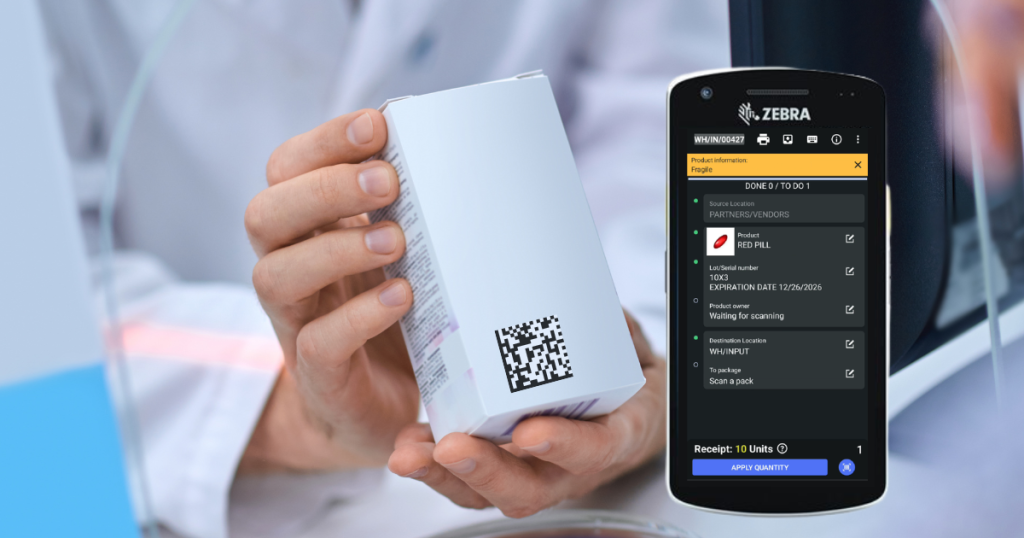
When talking about effective inventory management, and company management in general, one can’t help but to mention Odoo—a suite of business applications that helps to solve all the needs of a company of any size. Speaking of supply chain management with barcodes, Odoo Barcode allows you to assign barcodes to both product categories and individual products, as well as track inventory movements. Real-time barcode scanning significantly reduces time spent on processes related to data search.
Ventor is an application that allows you to read and process information from barcodes. Many companies find it to be the most complete barcode scanner application for warehouse management for the Odoo ERP system. The Ventor app barcode scanning helps companies to quickly search the database and find all relevant product information.
The huge advantage of this application is barcode maintenance via Odoo, namely the ability to record barcode-related data, such as item quantity, date of manufacture, expiration date, etc. Other benefits of this application for warehouse operators include seamless scanning and real-time updates. With this application, they can quickly and easily identify items by reading information about the product, manufacturer, and model.
The Ventor PRO app helps improve supply chain accuracy not only in healthcare but in many other fields as well. Retail stores, trading companies, manufacturing, warehousing, and logistics companies also find this application useful, as it allows for the following:
- create and run inventory for any product or location
- receive and dispatch orders in a few clicks
- move items packages from any location in a few clicks
- create sales and purchase orders right from the phone as a PDA
- pack products the smart way using a handheld and save on shipping
The Ventor app is used by administrators and managers who have found that it allows them to control their inventory on an entirely new level.
Why HIBC Matters for Modern Warehousing
Standardization in barcoding is necessary for many reasons. First, it improves the efficiency and accuracy of barcode scanning. It also reduces costs and lowers the risks of errors and returns. In addition, standardization significantly increases customer satisfaction and trust. HIBC barcodes help improve patient safety, automated supply chain management, and regulatory compliance in healthcare organizations.
HIBC supports efficient and error-free operations. This barcode enables the identification of medical products, including equipment, pharmaceuticals, and consumables. HIBC barcodes encode specific information about the product and, thus, tracking is accurate and reliable. Very often these barcodes contain check digits and other error detection mechanisms, so accurate data decoding is guaranteed. Specifically, HIBC barcode features are critical to prevent data entry errors and improve scanning accuracy.
Odoo barcode integration allows businesses to work more efficiently by controlling the software almost exclusively with the barcode scanner. Now that you know a lot more about HIBC structure and its benefits, the next step toward your company’s success is trying the Ventor app for HIBC support. Rest assured, this is exactly what you need to keep making your operations better!

Recommended articles:
- Data Matrix Codes: What They Are And How They Work In Odoo
- How to work with GS1 barcodes in Odoo
- How to Start Using RFID Tags with Odoo Inventory: A Practical Guide

------------------------------------------------------------------
Education: University of Lodz
------------------------------------------------------------------
Experience:
Product Marketing Manager
------------------------------------------------------------------
Current position: Product Marketing Manager
------------------------------------------------------------------
The Global Mini MBA