
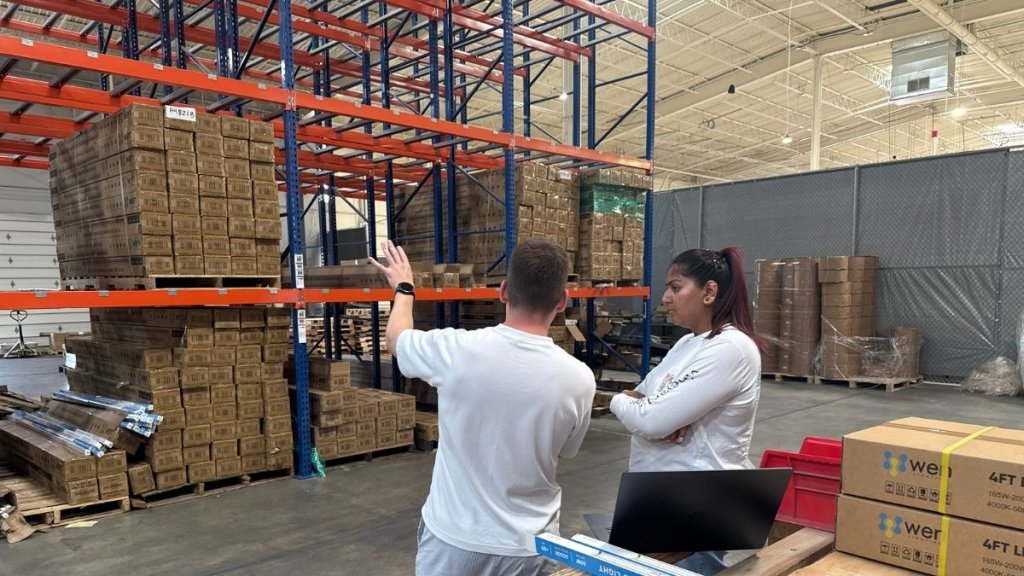
As businesses take off and diversify their product portfolio, facilities inevitably hit a hard capacity ceiling. In fact, you know that your warehouse is bursting at the seams when you see signs like cluttered receiving areas, congested aisles, and a noticeable drop in order-picking speed. If this sounds painfully familiar, then you likely also know that many organizations feel pressure to search for new premises or rent extra off-site space.
However, statistics claim that in 80% of cases, companies can afford to stay put at their current facilities. For most thriving businesses managing rapid warehouse growth, the five-year mark at the same location can become a critical juncture. To avoid tying up capital in long-term lease commitments, squeezing more value out of your space is vital.
Below, we explore proven warehouse optimization strategies based on golden practices.
1. Review Your Inventory With the SLOBEX Concept
You may discover that the quickest way to free up capacity is to take a clear look at your current inventory. In an absolute majority of order fulfilment centers, a significant portion of the volume is taken by slow-moving, obsolete, or excess stock (the SLOBEX matrix), and here are those item categories:
- Slow-moving: Items with low sales velocity that unjustifiably sit in high-velocity zones.
- Obsolete: Discontinued products, written-off materials, or unsellable goods that have been parked on upper rack levels for years.
- Excess: Surplus stock of high-velocity items ordered in excess to buffer against supply chain disruptions or forecasting errors.
Operational result: Clearing out non-performing stock instantaneously unlocks up to 20% of your warehouse’s usable volume while drastically improving inventory accuracy.
Real-world example: As the product line expanded, the facility ran out of primary pick slots. No more installing new racking—an inventory audit was conducted instead. In this case, eliminating obsolete stock freed up picking slots without capital investment.
2. Give Your Storage System a Decent Reboot
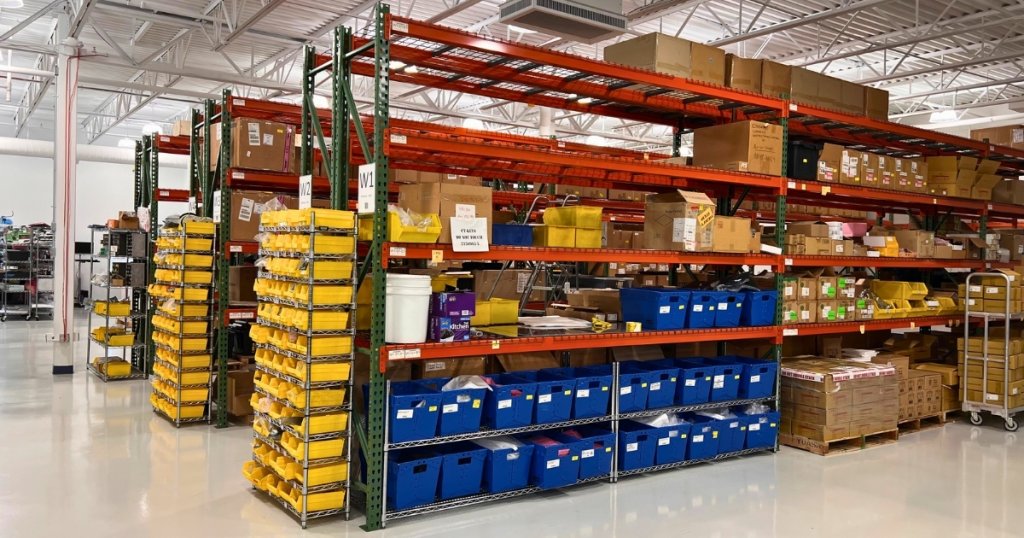
Many companies evaluate warehouse efficiency solely based on floor area, overlooking volume (i.e., the “storage cube”). This creates wasted vertical clearance above stored goods—a phenomenon known in the industry as ‘honeycombing.’ This occurs when rack beam heights are fixed for a single standard dimension, yet pallets of varying heights arrive at the warehouse.
Solutions may include:
- Adjusting beam heights: Grouping pallets by height and repositioning beams to match actual load dimensions, allowing for extra storage.
- High-density systems (Drive-In, Flow Racks): For large batches of uniform goods, deploying drive-in racks or gravity flow racks can help to compress your storage footprint.
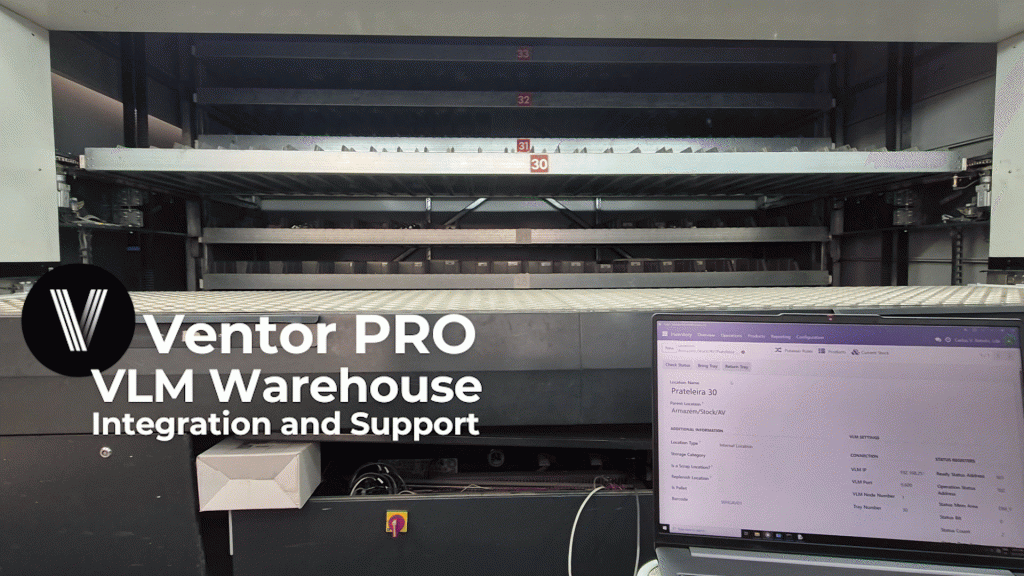
- Vertical Lift Modules (VLMs) and carousels: Automated vertical storage systems—like carousels and VLMs—condense small-item inventory into a minimal footprint while bringing SKUs straight to the operator.
- Mezzanine structures: In facilities with ample clear height, installing structural mezzanines unlocks valuable vertical volume for manual parts picking.
3. Conduct an In-Depth Analysis of Warehouse Automation
True space optimization extends beyond rack geometry and inventory classification into core process layout. Restructuring process flows and segregating functional zones helps recover critical floor area while avoiding capital expenditure.
- Optimizing the inbound staging area: Needless to say, the receiving area is a pivotal hub within any logistics layout. When the volume of incoming freight exceeds the rate, arriving goods begin to spill over into aisles and adjacent storage areas.
- Implementing strict time-slotting: Establishing a rigid schedule for supplier vehicle arrivals allows for workforce allocation at the loading docks throughout the shift, preventing pallet congestion.
- Cross-docking: For high-turnover items, direct transshipment comes out as a sensible approach. Goods move between receiving and shipping areas, bypassing the put-away stage in the heart of the facility, with material movement temporarily on hold.
- Streamlined labeling and Mobile WMS Integration: Bottlenecks in the receiving area are often caused by waiting for data entry into the warehouse management system (WMS). Shifting the initial labeling task to the supplier or automating the barcode scanning with a dedicated warehouse software like the Ventor app accelerates the transfer of goods to “ready-to-stock” status.
Reorganization of the Order Picking Zone
Inefficient organization of the picking zone not only throttles warehouse productivity but also demands extra space to store picking containers and assembled orders. The following actions may improve this situation:
- Product classification via ABC/XYZ analysis: Category A goods (fast-moving, high-turnover items) should be placed on the lower rack levels along the shortest picking routes, close to the shipping area. Category C goods (infrequently requested items) should be placed in remote zones or on upper rack levels to compress travel paths for personnel, enabling more orders to go.
- Zone and batch picking: Batch picking is not only warehouse wisdom, but also a great way to streamline workflows. Instead of a single picker, a group of staff members works in unison to keep the dock door flowing.
Do Intra-Warehouse Logistics Demand the Reduction of Aisles?
Numbers do not lie, as aisles may occupy up to one third of the total warehouse area. Therefore, the traffic layout should allow this space to be reclaimed for productive use through the following steps:
- One-way traffic in narrow aisles: You can get a great look at traffic routes for equipment moving between racks without collisions or compromising safety.
- Optimizing space for operational needs: Battery charging zones, equipment parking areas, and cardboard baling/collection points should be located in structurally awkward parts of the warehouse, reserving high-ceiling spans for product storage.
4. Manage Seasonal Peaks via External Buffer Warehouses (Off-Site Storage)
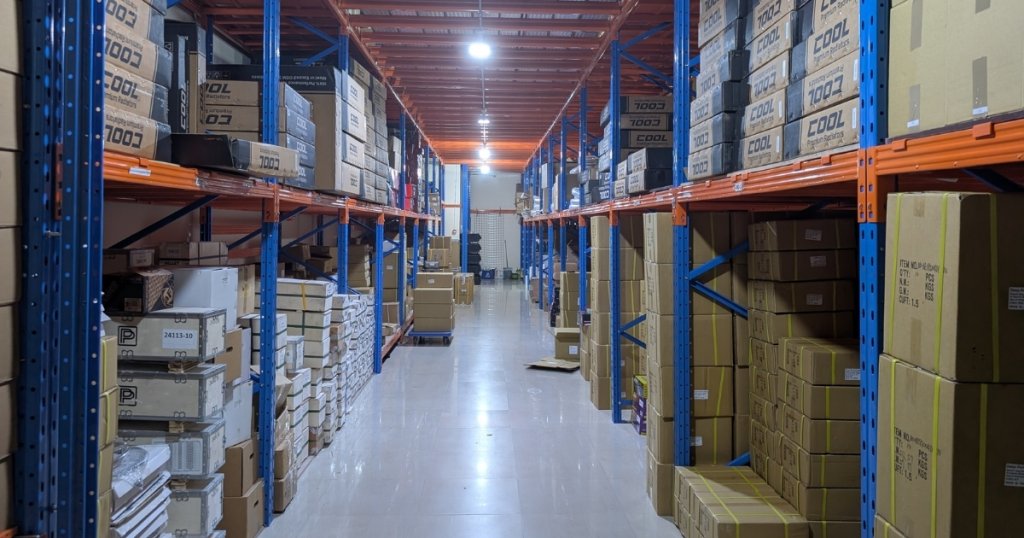
Pre-New Year season and summertime are notoriously known for maximum peaks when the in-house team is on demand. The company usually ends up overpaying to maintain half-empty space for the rest of the year, while trapping capital in low-yield processes.
The essence of a buffering strategy:
- The in-house warehouse is designed to handle the constant, baseline load.
- During seasonal surges, excess inventory is moved to external facilities (off-site storage)—such as short-term leased warehouses or 3PL provider sites.
- Products are stored at the external facility in mono-pallets and transported to the main warehouse in batches as storage slots become available.
- Using an off-site buffer increases the per-pallet storage cost at peak demand capacity but slashes annual overhead.
5. Work on Optimizing Warehouse Layout and Aisle Width
Equipment specs dictate aisle dimensions. Deploying standard counterbalance trucks takes a heavy toll on usable square footage, forcing warehouse operations to pay a spatial premium for wide aisles.
Here are some ways to reduce aisle width:
- Facilities can stop the spatial bleed by upgrading to specialized equipment, like articulated forklifts or VNA turret trucks, allowing them to compress aisle width.
- By staggering rack row positioning, operations are able to trim aisle width and capitalize on underutilized square footage. Installing extra rack rows boosts overall warehouse density by up to 30%.
Trade-off: Operating in narrow aisles requires greater precision from operators, which may slightly reduce equipment maneuvering speed.
Phased Warehouse Optimization Plan
- Phase 1: Conducting regular inventory audits via the SLOBEX methodology enables operations to flush out slow-moving and obsolete inventory.
- Phase 2: Profiling load heights and repositioning rack beams to maximize clear-height utilization.
- Phase 3: Tightening the operational screws and receiving/picking zone layouts, while implementing ABC analysis.
- Phase 4: Incorporating external (off-site) buffer warehouses to absorb seasonal volume surges.
- Phase 5: Modifying aisle layout and upgrading muscle to machine (e.g., VLMs, mezzanines).
Frequently Asked Questions (FAQs)
- What are the signs that a warehouse has hit full spatial saturation?
Core indicators include the systematic workflow friction of intake and dispatch nodes, aisle-level bottlenecks, and a freefall in operational efficiency due to a lack of existing picking locations.
- Why should I start with SLOBEX?
SLOBEX audits kickstart optimization initiatives by delivering immediate results without capital expenditure or structural overhauls. Writing off or liquidating obsolete inventory instantly reclaims high-velocity pick faces and removes operational friction at zero cost.
- Are there any hazards of setting a uniform rack opening height across the entire facility?
The short answer is ‘yes.’ A uniform height creates wasted vertical space above shorter pallets. This can result in the loss of several storage tiers facility-wide, forcing the enterprise to lease additional space.
- Can optimizing receiving and picking zones increase warehouse capacity?
If you accelerate intake processing and optimize pick-face organization, you systematically eliminate aisle encroachment and prevent operational bottlenecks before they disrupt material flow. Leveraging Odoo warehouse management to auto-assign high-velocity pick locations ensures that fast movers stay close to shipping.
- When might it be advantageous to utilize temporary off-site storage?
Off-site storage is beneficial for smoothing out short-term seasonal demand spikes. With this strategy, you no longer need to focus on maintaining excess internal warehouse space in low-throughput periods.
No Tricks Here – Strategy Is Everything
Seeking a new facility at the first sign of space constraints is a risky strategy, often leading to unjustified costs. Most warehouses leave resources on the floor by failing to capitalize on high-density slotting. To avoid these pitfalls, management should:
- Evaluate the warehouse based on usable cubic volume rather than square footage.
- Regularly refine core inventory management; move slow-moving or obsolete goods out of active inventory buffer zones.
- Adapt racking infrastructure to the dimensions of inbound volumetric profile.
- Deploy a tailored ERP for the warehouse to automate inventory control.
- Systematically review the layout of operational zones (receiving, picking, shipping) and MHE transit arteries.
- Stick to specialized equipment and buffer areas to cope with peak workloads.
About VentorTech
VentorTech specializes in Odoo warehouse management, helping businesses optimize inventory, barcode scanning, order fulfilment, and warehouse operations. We provide Odoo implementation, consulting, custom development, and ready-to-use warehouse solutions tailored to your business needs.
Our flagship product, Ventor PRO, extends Odoo with a professional Mobile WMS, allowing warehouse teams to perform daily operations faster and with fewer errors. Whether you’re launching a new warehouse or scaling an existing one, our experts are ready to help.
Recommended articles: